Varying Your Reformer Pilates Workout for Best Results
Let’s face it, we’re seeing a lot of sweaty, scantily-clad ladies draped across Pilates reformers on Instagram. Why?
Group reformer Pilates has become increasingly popular among women ages 18–35 because it combines strength, mobility, posture, endurance, and low-impact movement into one workout. But not all reformer Pilates classes are created equal. One of the biggest misconceptions in fitness is that every participant should perform the exact same workout in the exact same way. In reality, every body is different — and effective Pilates instruction should reflect that.
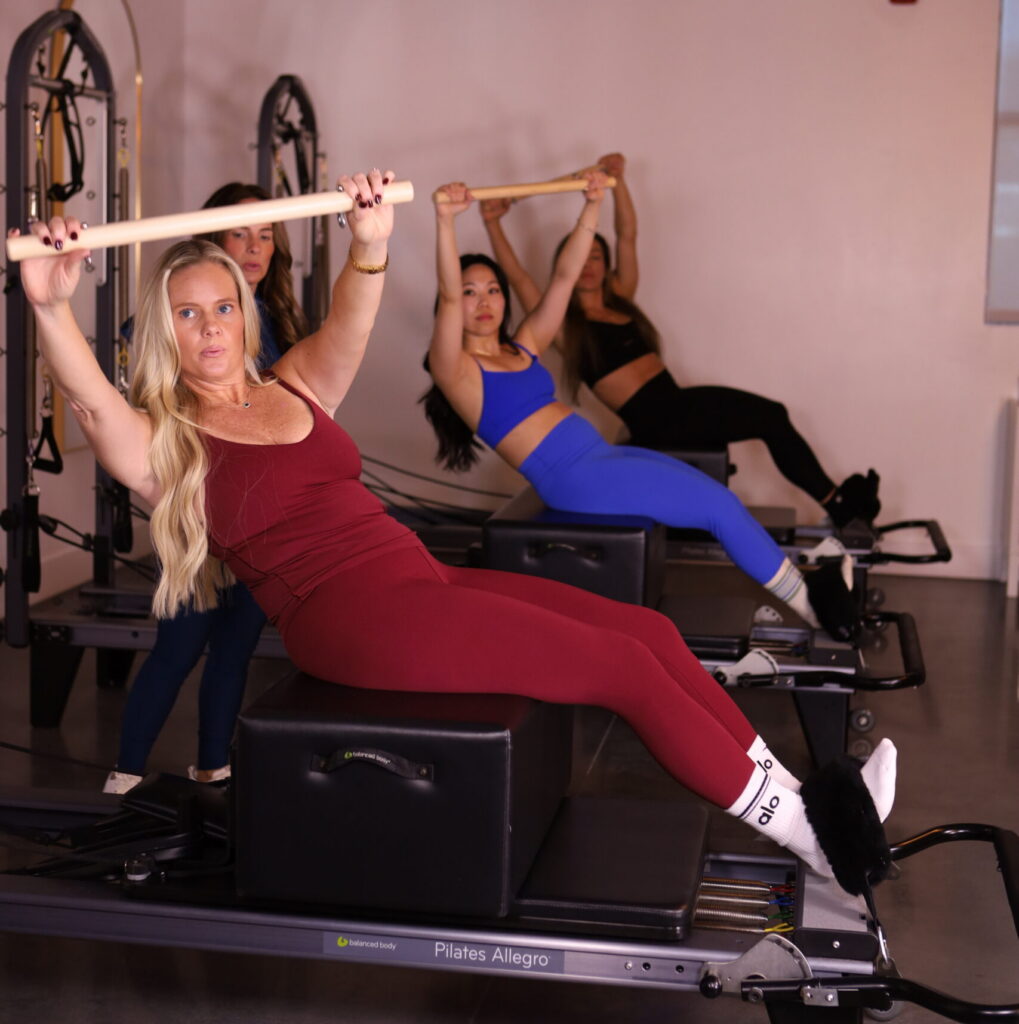
We all know by now that what we see on Instagram might not be the best thing for us to emulate. It’s not always real.
Differences in body type, flexibility, injury history, coordination, and fitness level all affect how someone moves on the reformer. Research published in the Journal of Exercise Rehabilitation found that Pilates can improve balance, flexibility, muscular endurance, and core strength, but proper instruction and exercise selection are critical to reducing injury risk and maximizing benefits. (pmc.ncbi.nlm.nih.gov)
1. Different Bodies Need Different Movement Strategies
Some women entering a reformer class may have years of athletic experience, while others are completely new to exercise. Some participants naturally have greater mobility, while others may struggle with tight hips, weak core muscles, or joint instability. The gal on the reformer next to you might be recovering from cancer, entering perimenopause, or in her first trimester.
A high-quality Pilates instructor understands how to adjust exercises for individual biomechanics, conditions, and skill levels within the same group class. This might mean increasing spring resistance for one client while modifying the range of motion for another.
A “one-size-fits-all” group class often ignores these differences. That can make workouts less effective — and in some cases, less safe — especially when participants are encouraged to move quickly without understanding proper alignment or control. Generic, dumbed-down classes teach to a prescribed standard not rooted in science or kinesiology, but rather heavily influenced by trends and Instagram.
2. Comprehensive Instruction Matters More Than Intensity
Many franchise fitness studios market fast-paced, cardio-focused Pilates classes that promise sweat and calorie burn. While cardio-based reformer workouts may feel exciting, intensity alone does not automatically equal quality movement.
According to Harvard Health, Pilates is most beneficial when it emphasizes controlled movement, posture, breathing, and stability rather than speed alone. (health.harvard.edu)
Poorly supervised high-speed reformer classes may increase the risk of improper form, especially for beginners. A sustainable Pilates program should challenge participants while still prioritizing alignment, muscular control, and joint safety.
Sweating is not the only measure of a good workout. Long-term consistency, injury prevention, and movement quality matter more than simply feeling exhausted after class.
3. Layered Progressions Help Everyone Improve Safely
One of the strengths of reformer Pilates is that exercises can be layered. An experienced instructor can offer progressions for advanced clients while simultaneously giving modifications to beginners or those recovering from limitations.
This approach allows women at different experience levels and with varying capabilities to succeed together in the same class environment. Research has shown that Pilates-based exercise programs may improve body awareness, posture, flexibility, and muscular endurance across a wide range of populations. (nih.gov)
What to Look for in a High-Quality Reformer Pilates Studio
- Comprehensively trained instructors, not weekend-certified trainers
- Small group class sizes with individualized attention (less than 12)
- Exercise modifications and progressions offered regularly
- Focus on form, alignment, and safety
- Instructor feedback throughout the class, other than motivating chants
- A welcoming environment for beginners and mixed fitness levels
If you feel nervous about starting group exercise, you are not alone. Many women worry they will not be strong enough, coordinated enough, or experienced enough to keep up. The reality is that a good reformer Pilates studio expects beginners and knows how to support them. Pilates is not about perfection. It is about learning how your body moves, gradually building confidence, and creating a workout routine that remains safe, effective, and sustainable for years to come.